As workshops take on more complex projects and clients demand cleaner results, you may be searching for equipment that delivers high precision with fewer steps and less waste. Traditional welding systems can only go so far before distortion, rework, and limits in material flexibility begin to slow down your workflow. This is where an industrial laser welder enters the picture—a powerful, modern solution designed for high-accuracy, high-efficiency joining across multiple materials and applications.
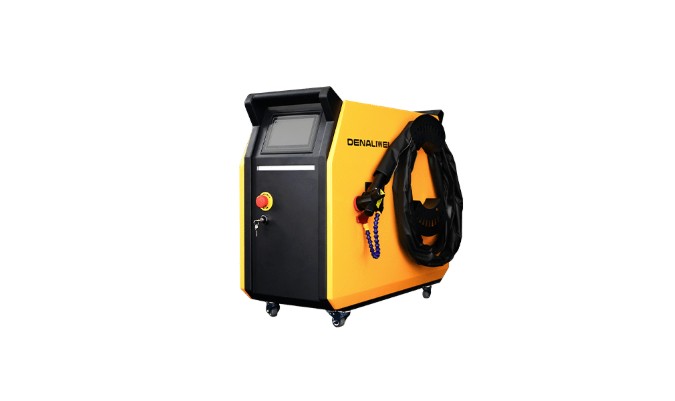
With industries rapidly adopting laser technology for its speed and consistency, many workshops are upgrading to stay competitive. If you’re considering the move, you can explore options such as the industrial laser welder, which provides advanced configurations built for modern manufacturing needs.
Before you make an investment, here’s a detailed look at the top benefits and what this technology could mean for your long-term operations.
Improved Weld Quality and Precision
High Precision Beam and Fine Joint Control
An industrial laser welder uses a tightly focused beam that allows for extremely accurate weld placement, making it ideal for small, delicate, or intricate components.
- The process generates narrow heat-affected zones (HAZ), helping you maintain the integrity and shape of the base material.
- Cleaner heat distribution also reduces distortion, meaning your parts fit together accurately with minimal post-processing.
Stronger Welds, Less Rework
Laser welding often results in deep, uniform penetration, producing strong and reliable metallurgical bonds.
- Fewer defects translate to better structural performance and longer product lifespan.
- Since laser welds leave cleaner seams with minimal spatter, you can expect less grinding, polishing, or reshaping, ultimately reducing scrap and rework.
Increased Productivity and Efficiency
Faster Cycle Times and Higher Throughput
Laser welding is significantly faster than many traditional processes.
- It supports continuous-wave or pulsed modes, enabling rapid joining without compromising quality.
- Because it integrates easily with CNC equipment, robotic arms, and automated production systems, an industrial laser welder dramatically boosts overall throughput.
Reduced Post-Processing and Shorter Setup
Fewer imperfections and low distortion mean your team spends less time on finishing work.
- Reduced need for clamps and fixtures minimizes setup time.
- Since the process uses minimal filler material and generates less spatter, consumable costs drop as well.
Versatility in Materials and Applications
Wide Material Compatibility
One of the biggest advantages is flexibility. Laser welders can join:
- Thin sheets
- Dissimilar metal combinations
- Reflective materials like aluminum and copper
- Composites and advanced alloys
This expands your workshop’s ability to take on a wider variety of client projects.
Ideal for Complex Geometries and Tiny Parts
Because laser welding is non-contact, the beam can reach:
- Tight corners
- Deep grooves
- Small, intricate components in electronics, medical devices, or precision tools
Its minimal thermal impact creates new design possibilities that traditional methods can’t achieve.
Cost Savings and Return on Investment
Lower Operating and Maintenance Costs
Low heat input and precise control result in fewer rejected parts and less material waste.
- The non-contact nature means minimal tool wear, extending the life of accessories.
- Reduced need for filler metals and consumables directly lowers operating costs.
Long-Term Value for High-Volume Workflows
While the upfront cost of an industrial laser welder may seem high, the return is compelling:
- Faster production cycles
- Consistent weld quality across hundreds or thousands of parts
- Lower manual labor requirements
- Greater ability to take on high-value, precision-based contracts
In high-volume workshops, the system often pays for itself within a predictable timeframe thanks to its efficiency.
Future-Proofing Your Workshop
Built for Automation and Industry 4.0
Laser welders integrate seamlessly into smart manufacturing environments:
- Robotics
- Automated handling systems
- Data logging and real-time quality monitoring
This positions your workshop to stay aligned with the future of industrial production.
Competitive Advantage through Speed and Precision
As client expectations rise, offering laser-level precision can set your workshop apart.
- Whether you serve aerospace, automotive, medical, or consumer manufacturing, laser capability opens doors to new, demanding industries.
Considerations Before Investment
Upfront Cost and Skill Requirements
You’ll need to plan for:
- Operator training
- Safety protocols
- Calibration and parameter control
- Learning curve for new workflows
Material and Application Constraints
Some materials—especially highly reflective metals—require specific wavelengths or setups to achieve stable results.
- Joint fit-up precision is also crucial, so existing processes may need enhancement.
Workflow Alignment
To maximize value, ensure your workshop setup aligns with the machining, fixturing, and material handling required for a laser welding environment.
How to Choose the Right Industrial Laser Welder
Here are key factors to evaluate before you purchase:
- Production Volume & Quality Requirements
- Laser Type (fiber, YAG, etc.)
- Power Levels & Beam Delivery Options
- Automation Compatibility
- Training, Maintenance & Service Support
- Scalability for Future Upgrades
A reliable provider will guide you through these elements to make a confident selection.
Why Denaliweld Supports Smarter Workshop Upgrades
If you’re exploring an investment that balances precision, flexibility, and industrial-grade durability, Denaliweld offers solutions engineered for modern manufacturing. Their industrial laser welder options are designed with performance, ease-of-use, and automation readiness in mind—ideal for workshops planning for long-term scalability without compromising quality.
Conclusion
Investing in an industrial laser welder can transform the capabilities of any workshop. From precision and speed to reduced waste and long-term cost savings, laser welding brings a level of efficiency that traditional systems simply can’t match. Its versatility across metals, composites, and intricate geometries makes it valuable for both everyday fabrication and high-end applications.
As the industry moves toward automation and higher precision standards, adopting laser welding today positions your workshop for tomorrow’s opportunities. If you’re ready to explore the potential of this technology, consider evaluating solutions such as the industrial laser welder and take the next step toward smarter, more scalable production.
More Stories
Technological Requirements for the Manufacture of Electronic Components
How Adchitects Creates Powerful Brand Stories Through Memorable Visual Design
The New Era of Casino Gaming: How Crash Games and Fast-Paced Titles are Redefining Online Betting