
Every brand has a story. The problem is that most of them are stuck in a PDF deck, buried on an “About Us” page, or trapped in the founder’s head. In 2026, that’s a serious competitive disadvantage. Audiences scroll past text. They pause for video. And they remember stories.
The good news is that producing a brand story video no longer requires a $20,000 agency retainer or a three-week production timeline. AI has collapsed the entire workflow — script, visuals, voiceover, editing — into something a solo marketer can finish in an afternoon. In this guide, I’ll walk you through how to actually do it, what separates a forgettable AI video from a memorable one, and which tools are worth your time right now.
Why Brand Story Videos Matter More Than Ever
We’re well into 2026, and the marketing landscape has gotten louder, not quieter. Every small brand is publishing daily content, every category is saturated with AI-generated posts, and attention spans are at historic lows. In this environment, generic product ads don’t cut through. What does cut through is narrative — a clear, emotional explanation of why your brand exists, who it’s for, and what makes it different.
This is especially true for SMBs and DTC founders who can’t outspend the giants. You can’t win on media budget, but you can win on story. A well-crafted 60-second brand video, repurposed across your homepage, your paid ads, your email welcome series, and your social channels, often does more for conversion than ten times the spend on generic display ads.
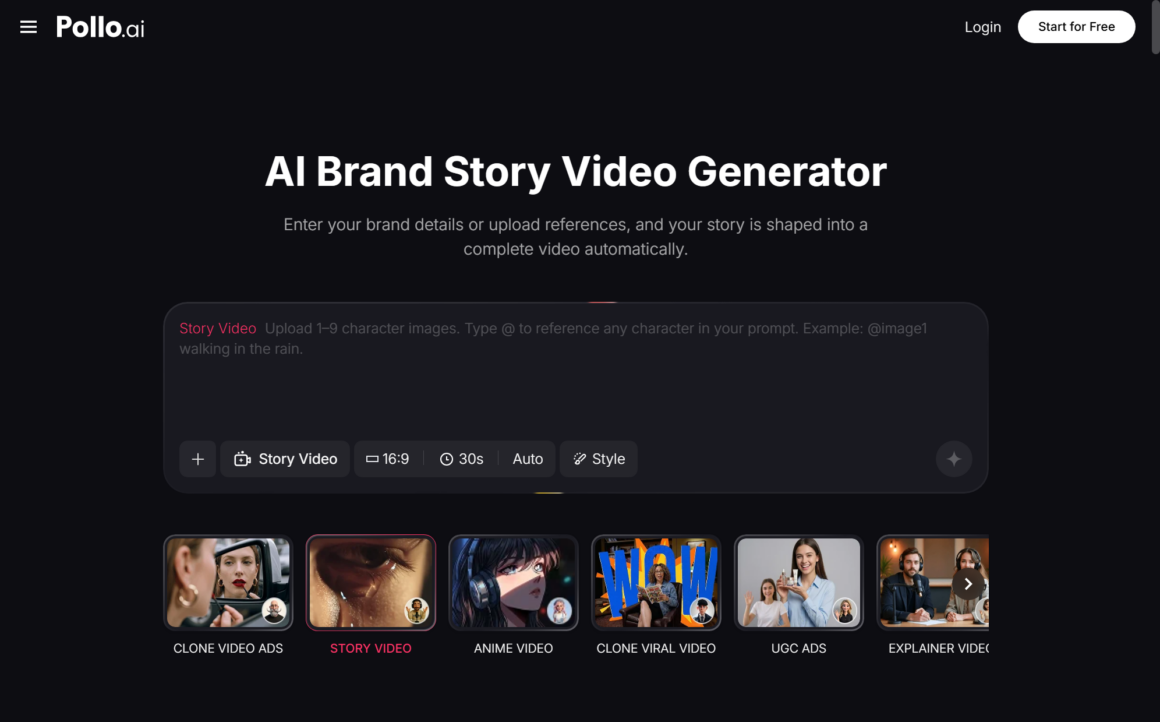
The bottleneck has always been production. That’s where Pollo AI’s AI Brand Story Video Generator inside the Marketing Studio comes in. You feed it your brand details — mission, audience, tone, key differentiators — and it generates a structured, scene-by-scene brand video with voiceover, visuals, and pacing already locked in. The whole process takes minutes, not weeks, which is exactly what small marketing teams need in 2026.
The Anatomy of a Brand Story That Actually Converts
Before we get deeper into tools, let’s talk structure. The best brand videos I’ve seen this year all follow a similar arc, whether they’re for a skincare startup or a B2B SaaS company.
Open with the problem, not the product. The first 5 seconds should make the viewer feel seen. “Tired of skincare that promises everything and delivers nothing?” works better than “Introducing our new serum.”
Introduce the brand as the guide, not the hero. The customer is the hero of your story. Your brand is the mentor that helps them win. This single mindset shift dramatically improves conversion.
Show transformation. Before and after. Pain and relief. Confusion and clarity. Visual contrast is what makes a brand story memorable.
End with a clear, low-friction call to action. “Try it free for 14 days” beats “Visit our website” every time.
Keep the whole thing under 90 seconds for paid ads and under 2 minutes for organic. Anything longer and you’re losing the back half of your audience.
How to Build Your First AI Brand Video in an Afternoon
Here’s the workflow I recommend to anyone starting from scratch. It assumes you have zero video production experience.
Start by writing your story in plain text. Don’t worry about formatting or polish — just answer four questions: Who is your customer? What problem are they facing? How does your product solve it? Why should they trust you? That’s your script foundation.
Next, run it through an AI script polisher (ChatGPT, Claude, or whatever you prefer) and ask it to tighten the language for video. Aim for 150–180 words for a 60-second piece.
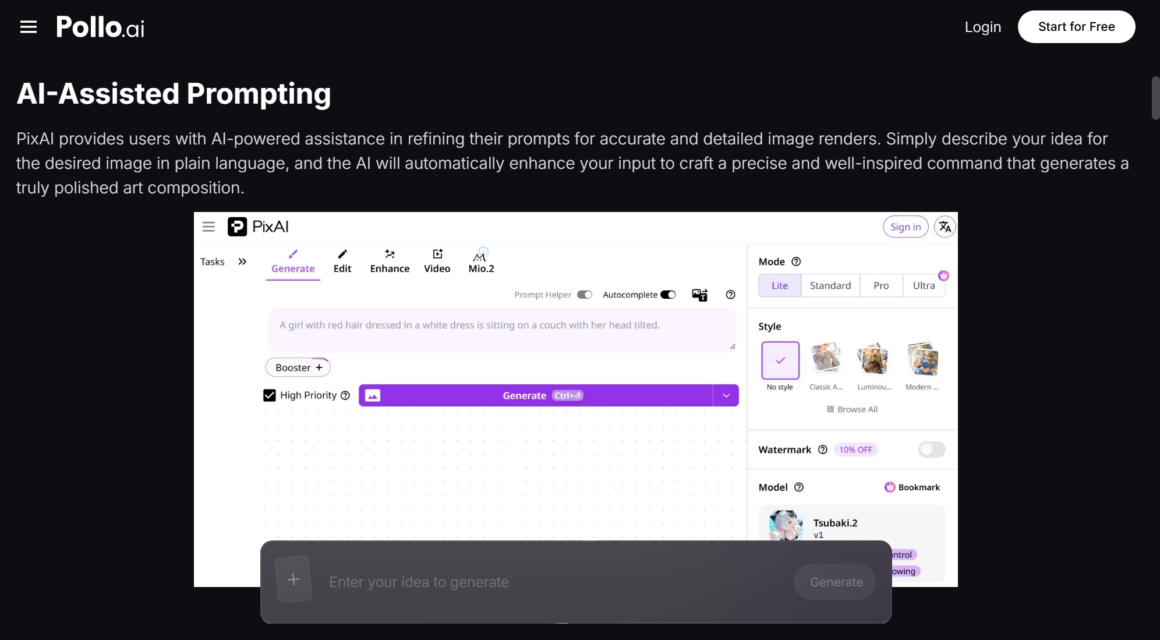
Now move into production. This is where Pollo AI’s Marketing Studio really earns its keep. You can generate the full video from your script, choose a brand-appropriate voice, and tweak the pacing scene by scene. If you need supporting visuals that match a specific aesthetic — say, anime-inspired illustrations for a Gen Z gaming brand, or stylized character art for a creator-focused product — Pollo AI integrates PixAI inside the same credit system, so you can generate stylized imagery and drop it directly into your video timeline without juggling separate accounts. This kind of consolidated workflow is what makes Pollo AI different from the patchwork of single-purpose tools most marketers were stitching together a year ago.
Finally, export in multiple aspect ratios. You’ll want 9:16 for TikTok and Reels, 1:1 for Instagram feed, and 16:9 for YouTube and your website. Most AI platforms now handle this automatically, but always preview each version before publishing.
Common Mistakes to Avoid
The biggest trap I see brands fall into is trying to say everything in one video. A brand story video isn’t a feature list. It’s an emotional hook. Pick one core message and let everything else support it.
The second mistake is over-relying on AI voiceover defaults. The stock voices are good in 2026, but they’re still recognizable if you don’t customize them. Spend the extra five minutes adjusting tone, pacing, and emphasis. Better yet, record a 30-second clip of yourself and use voice cloning for authenticity.
The third mistake is treating the video as a one-time asset. A brand story video should be the seed for at least 10 derivative pieces — short cutdowns for ads, GIFs for email, quote cards for LinkedIn, behind-the-scenes posts about how you made it. Repurposing is where the ROI really compounds.
Matching Your Visual Style to Your Audience
One thing that’s evolved a lot in 2026 is how flexible visual styles have become. A year ago, AI-generated brand videos all looked vaguely the same — that glossy, slightly uncanny “AI default” aesthetic. Today, you can dial in almost any look: hand-drawn illustration, photorealistic cinematic, retro 90s VHS, clean Scandinavian minimal, vibrant anime, gritty documentary.
This matters because aesthetic is part of your brand. A B2B fintech video should not look like a Gen Z streetwear ad, and vice versa. Spend time on your first project building out a visual reference library — three or four sample frames that capture the vibe you want. Feed those into your prompts and you’ll get dramatically more on-brand results.
Final Thoughts
Brand storytelling used to be a luxury reserved for companies with big budgets and bigger creative teams. In 2026, it’s accessible to anyone with a clear message and an afternoon to spare. Tools like Pollo AI have closed the production gap entirely, which means the differentiator is no longer who can afford to make a video — it’s who actually has something interesting to say. Get clear on your story, pick a tool, ship your first version this week, and iterate from there. Your future customers are scrolling right now.
More Stories
The Technology Quietly Changing How Modern Homes Work
AeonScope.net Tech Review: What To Know About This Tech Hub In 2026
Slot Entertainment Goes High-Tech: Inside the Digital Transformation