
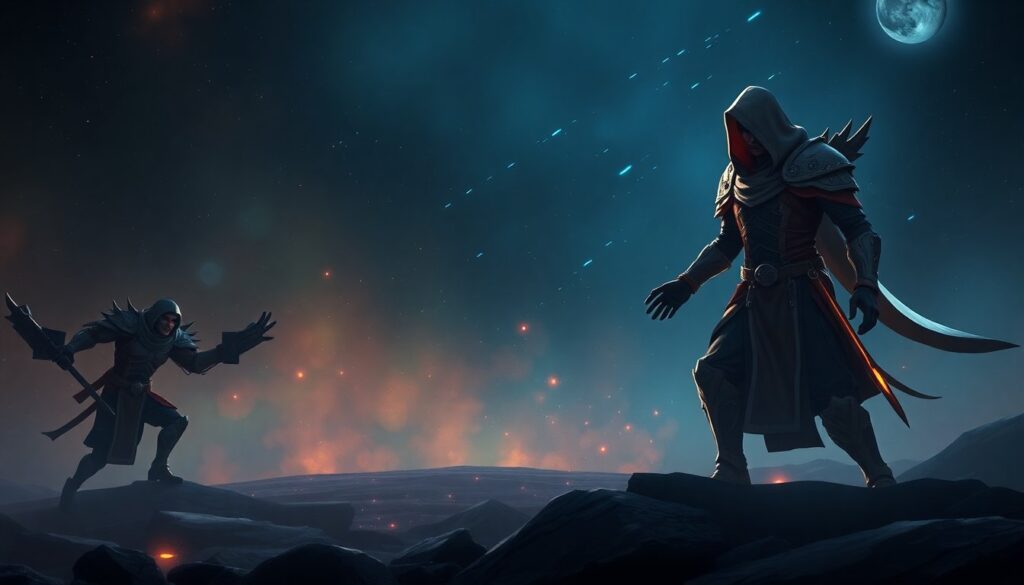
games aeonscope appears in indie and studio circles in 2026 as a rising sci-fi fantasy property. This guide explains what games aeonscope offers, how its setting works, and why players join. It states core hooks, basic mechanics, and clear starting steps. It avoids fluff and gives direct advice so readers can decide quickly if games aeonscope fits their play style.
Key Takeaways
- Games Aeonscope combines sci-fi and myth through the Aeonscope device, unveiling alternate timelines and hidden civilizations that shape player missions and world events.
- Players engage in hybrid gameplay mixing third-person action, tactical planning, and light crafting, utilizing mechanics like scope scanning and timeline rewriting for strategic advantages.
- Choosing and committing to a faction early grants unique mods and rewards, with daily faction tasks providing steady progression in Games Aeonscope.
- New players should focus on earning echo shards, mastering one build type—ranged or timeline-support—and upgrading gear gradually for steady power growth.
- Co-op success relies on team communication with assigned roles and shard management, while seasonal events offer exclusive gear and cosmetics worth prioritizing.
- Community resources such as official forums, wikis, and streaming guides significantly speed up progression and optimize builds in Games Aeonscope.
What Is Aeonscope? Core Concept, Setting, And Story Hooks
Aeonscope is a series of linked titles and expansions that mix science fiction and myth. The brand centers on a device called the Aeonscope that reveals alternate timelines and hidden civilizations. It places players in zones where tech and ancient magic coexist. The narrative frames missions around recovering fragments of memory, repairing timelines, and choosing which eras survive.
The setting splits into several major zones. One zone contains ruined megacities where AI monitors crashed heavens. Another zone holds living forests with time-shifted fauna. A travel hub connects zones via gate rifts that the Aeonscope opens. The main antagonists vary by title. Some foes are corrupted time-keepers. Others are corporate enforcers who weaponize timeline data.
Story hooks drive player choice. Players choose to restore a memory shard for a city, to free a trapped AI, or to erase a traumatic event from a faction’s past. Each choice changes later missions and alters available NPC allies. Aeonscope frames these choices clearly so players see trade-offs before they act. The world reacts to choices with tangible changes in faction control, resources, and mission access.
Fans praise the lore for its layered reveals. Developers release short fiction and mission logs that expand the backstory. Players who read these extras gain clear context for faction motives and hidden objectives. The design keeps new players able to jump in, while offering deeper threads for those who want to follow the full arc of the Aeonscope mythos.
Gameplay, Mechanics, And Available Modes
Aeonscope focuses on hybrid gameplay that blends third-person action, tactical planning, and light crafting. Players control a single avatar in most titles. The avatar can switch between combat stances and timeline modes. Combat stance affects weapon behavior and stamina. Timeline mode slows time briefly and reveals hidden paths and weak points.
The core mechanics include scope scanning, timeline rewriting, and faction reputation. Scope scanning uses a meter that fills when the player studies objects or NPCs. Once full, the player can reveal a hidden timeline overlay. Timeline rewriting consumes a resource called echo shards. Players earn echo shards from missions, exploration, and faction tasks.
Progress relies on gear, mods, and skill trees. Gear drops with modular slots for tech and rune mods. Tech mods boost ranged damage and defense. Rune mods grant passive buffs like faster shard gain. Skill trees split into three branches: combat, support, and timeline. Players pick a primary and a secondary branch. This choice defines early tactics and role in group play.
Available modes include solo campaign, co-op missions, and a competitive arena. Solo campaign focuses on story progression and base building. Co-op missions scale enemy difficulty and reward higher echo returns. The arena offers timed objectives and small-team matches for ranked rewards. Developers support seasonal events that introduce limited gear and short story arcs.
The user interface emphasizes clarity. HUD elements show health, shard meter, and timeline overlays. Map markers indicate active and potential timeline anomalies. The game provides adjustable difficulty and accessibility options, including aim assist and color filters. It keeps options simple so players can focus on play rather than menus.
The economy uses a currency named credits and a premium token for cosmetic purchases. Credits buy gear blueprints, repair parts, and faction offerings. The premium token buys cosmetics and instant stash space. Developers avoid pay-to-win mechanics by restricting performance mods behind gameplay progression rather than purchases.
Tips For New Players: Progression, Builds, And Community Resources
New players should focus on three early goals: earn echo shards, join a faction, and learn one build. Echo shards unlock timeline changes and power gear. Players earn shards by exploring, completing side missions, and selling salvage.
Faction choice shapes early rewards. Each faction sells unique mods and offers rank rewards. Players who join a faction should do daily faction tasks for steady credits and gear blueprints. Switching factions resets some progress, so players should plan before switching.
For builds, beginners should pick either a ranged or a timeline-support build. A ranged build uses high-precision weapons and tech mods. A timeline-support build uses rune mods and skills that increase shard gain and slow time for allies. Both builds work in solo and co-op. Players should socket at least one defensive mod to survive tougher encounters.
Progress pacing matters. Players should upgrade a single weapon and scale armor gradually. They should invest skill points into one primary tree first. This approach yields consistent power spikes and reduces frequent respecs.
Community resources help players move faster. Official forums host patch notes and developer replies. Fan wikis list drop locations and optimal mod combinations. Streaming channels show live builds and mission runs. Players who watch a short build guide will often save hours of trial-and-error.
For group play, players should communicate role and shard usage. A coordinated team that assigns a timeline specialist and a damage lead clears co-op missions faster. Players can form casual squads via the in-game finder or third-party apps.
Finally, players should test seasonal content quickly. Limited events give unique blueprints and cosmetics. They should prioritize event goals that unlock permanent upgrades first, then chase cosmetics if time allows.
This set of tips helps new players start strong in games aeonscope. They reduce wasted time and improve early enjoyment in the titles and modes that make the Aeonscope line worth exploring.
More Stories
Real-Time Sentiment Nebula For AeronScopeTN: How Gaming Shops Can Read Players’ Moods And Act Fast
Aeonscope Bamboo Buy Review: The Practical Gaming Ebook Guide For 2026
Tech Analysis: Orchid Aeonscope Gaming Shop Review — Performance, Value, And Buying Guide (2026)